As the World Cup 2026 draws closer, hosted by the United States along with Canada and Mexico, the spotlight isn’t just on the teams or venues, but also on the intriguing figure of Donald Trump. Known primarily for his business ventures and political career, Trump has somehow woven himself into the narrative of this global soccer spectacle. But beyond the headlines and the political theatrics, the question remains: does Donald Trump truly possess any soccer expertise? While soccer—referred to as “soccer” rather than “football” stateside—lags behind baseball, basketball, and American football in popularity across the U.S., the 2026 tournament has thrust this sport front and center in the country’s sporting consciousness. Trump’s involvement—ranging from receiving a peace award for his role in bringing the Cup home to hosting national teams and cozying up to FIFA president Gianni Infantino—sparks curiosity and skepticism alike about his actual grasp of the game.
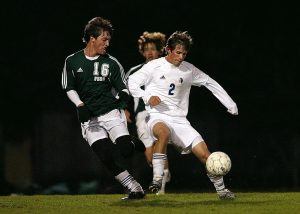
Is Trump’s connection to soccer merely performative, a political maneuver wrapped in “soccer politics,” or does he have a foundation in the sport? Notably, his stint with the New York Military Academy’s soccer team in his youth, where he played as a fullback, suggests some early exposure. Reports from that time paint a picture of a player more concerned with discipline and control than finesse. Yet, this background is intriguingly juxtaposed with his 2025 assertions boasting about his speed on the field, humorously comparing himself to legends like Ronaldo and Messi. His attempts to realign the American perception of the sport—challenging the use of the term “soccer” and emphasizing the need to distinguish it clearly from the NFL’s football—add another layer to his narrative as an unconventional advocate for the sport’s growth in the U.S.
With the World Cup set to be the biggest soccer event ever hosted in the U.S., involving multiple cities and states, Trump’s role highlights the complex relationship between sports commentary, political influence, and FIFA’s stewardship of the event. Despite the controversies, including debates on safety and venue decisions, the tournament offers an unprecedented opportunity to elevate soccer’s profile in America and beyond. Observing Trump’s navigation of this arena reveals much about how global sports events can be entangled with national identity and political agendas.
Donald Trump’s Tangential Soccer Knowledge and Its Impact on World Cup 2026
Donald Trump’s familiarity with soccer is best described as passable but selective. His primary claim to a soccer past dates back to the New York Military Academy, where he briefly played and was reportedly responsible for marking a section of the field defensively. Coaches acknowledged his limited experience but credited him with fulfilling his role adequately. This pocket of history is often overshadowed by Trump’s later political rhetoric—criticizing the origins of players from Latin America and blending sports with his signature “America First” ideology.
Despite this, Trump has capitalized on his association with the World Cup. His interactions with key soccer figures, like FIFA president Gianni Infantino, and his ceremonial appearances at events, such as the 2025 Club World Cup trophy presentation to Chelsea, illustrate his strategic positioning. Nevertheless, it’s questionable how deep his soccer expertise runs beneath the surface. His Trump statements often emphasize national pride and event promotion rather than detailed understanding of soccer tactics or culture.
Trump’s Influence on Soccer Politics and World Cup Preparations
Trump’s role as chairman of the U.S. organizing task force for the World Cup has infused the event with a distinct political flavor. His approach has intertwined soccer politics with broader political narratives, including immigration policies impacting tournament accessibility and the framing of the event within his MAGA movement. While FIFA retains ultimate control over match locations and event execution, Trump’s vocal comments and alleged threats to alter planned venues under the guise of safety have stirred controversy.
The World Cup’s hosting cities, such as Los Angeles, Toronto, and Kansas City, are navigating this political landscape while gearing up for the influx of fans and media. Stakeholders are closely monitoring how Trump’s involvement might shape the tournament’s legacy both domestically and internationally. His influence could either help soccer gain traction in traditional American sports markets or reinforce skepticism towards the sport’s authenticity in U.S. culture.
From Soccer Novice to Cultural Commentator: Trump’s Public Soccer Persona
It’s an undeniable fact that soccer isn’t America’s favorite pastime—it sits way behind baseball and basketball in public affection. Yet, Donald Trump has made an effort to position soccer as a sport worthy of national attention, if only to fuel patriotic sentiment. His public remarks, including the push to swap “soccer” for “football” in American vocabulary, reveal an attempt to align with global sporting norms, even if it causes confusion domestically.
Moreover, Trump’s efforts to involve his family in soccer, especially his youngest son Barron who reportedly has a passion for Arsenal FC, show a personal albeit superficial connection to the sport. Wayne Rooney’s recounting of a golf outing with Trump where he was asked to coach Barron sheds light on how Trump’s relationship with soccer figures sometimes transcends mere politics. Yet, this interest is more anecdotal than strategic.
Whatever one makes of Trump’s soccer credentials, it’s clear that his presence in the World Cup conversation highlights the unique intersection of sports and politics in 2026. For a country where soccer still battles for mainstream acceptance, Trump’s footprint in the event is less about deep soccer knowledge and more about leveraging the sport as a stage for political theater.
For further insights into the unfolding World Cup saga and the cities gearing up to host the matches, it’s worth checking out how American urban centers are preparing: explore the dynamics in places like USA 2026 World Cup and Los Angeles 2026 World Cup, where sports infrastructure and fan excitement are building up to what promises to be an unforgettable soccer festival.